
Better sleep, better mental health
A practical, research-backed guide to falling asleep faster, sleeping deeper, and waking up clearer.
9 min read
Why sleep matters
Sleep is not a luxury — it is the foundation on which your mental health is built. When you sleep well, you think more clearly, regulate your emotions more effectively, and face challenges with greater resilience.
Yet across Africa, millions of people struggle with poor sleep — whether due to stress, irregular schedules, noisy environments, or simply not knowing what good sleep hygiene looks like. This guide is designed to change that.
Emotional regulation
During REM sleep, your brain processes emotional experiences. Without enough REM, you wake up more reactive, irritable, and less able to manage difficult feelings.
Cognitive function
Sleep consolidates memories and clears metabolic waste. Even one night of poor sleep reduces concentration, decision-making, and creative thinking by up to 30%.
Anxiety & depression risk
People who consistently sleep less than 6 hours per night are more than twice as likely to develop anxiety and depression compared to those sleeping 7–8 hours.
Understanding your circadian rhythm
Your body runs on an internal clock — the circadian rhythm — that governs when you feel awake and when you feel sleepy. This clock is primarily set by light exposure, but also by meal timing, physical activity, and routine.
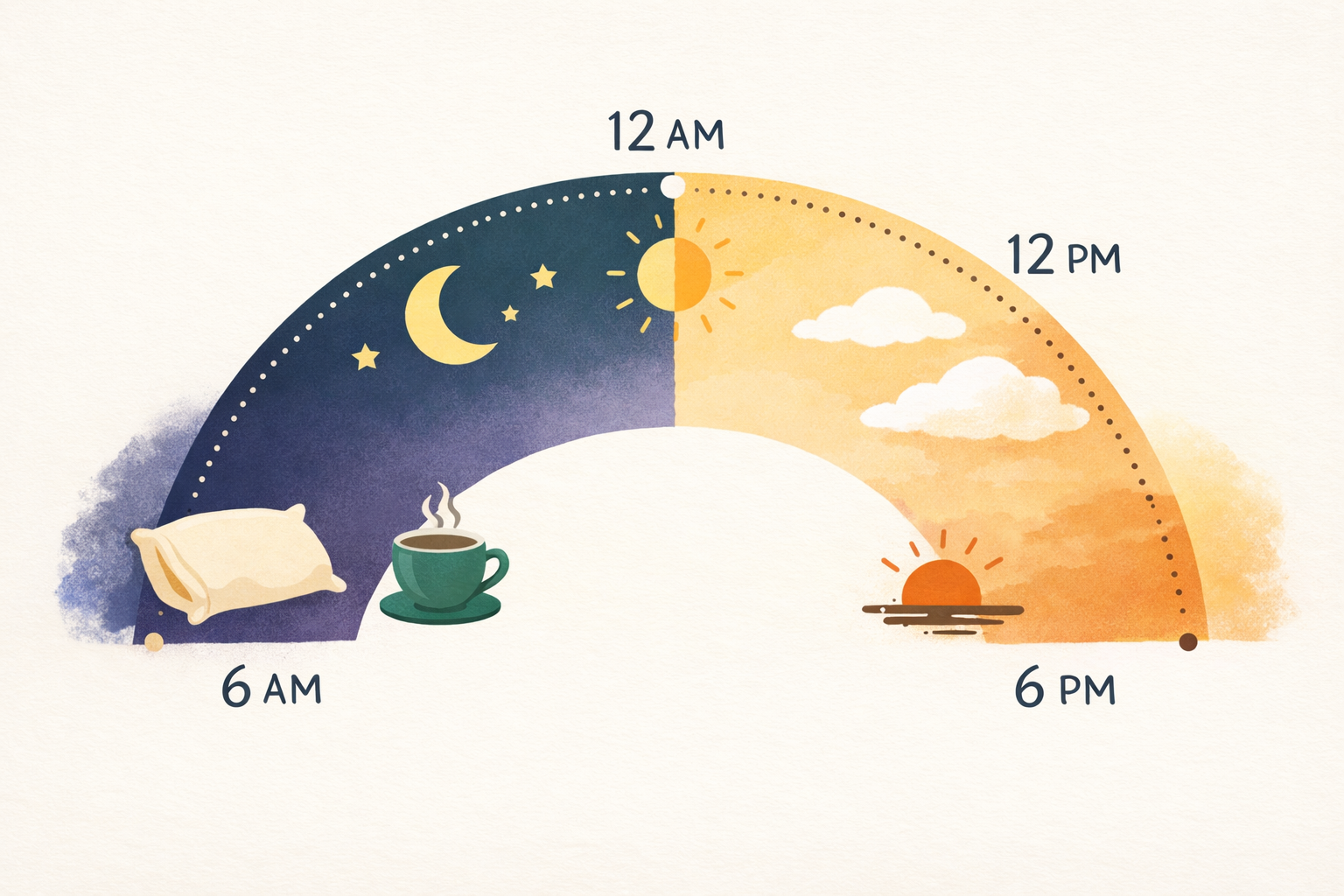
The single most powerful thing you can do is consistency. Going to bed and waking up at the same time every day — including weekends — trains your body to anticipate sleep.
Morning light exposure is equally important. Spending 10–15 minutes in natural sunlight within the first hour of waking tells your brain the day has begun, strengthening your sleep drive that evening.
Building a wind-down routine
Your brain cannot switch from full activity to sleep instantly. It needs a transition period — a wind-down routine that signals the shift from wakefulness to rest.

A sample 60-minute wind-down
60 min before bed: Dim the lights. Switch off overhead fluorescent lights, use warm low lamps. Put your phone on Do Not Disturb.
45 min before bed: Put away all screens. Pick up a book, listen to calm music, or talk quietly with family.
30 min before bed: Make herbal tea (chamomile, lemongrass). Journal — write three things you're grateful for.
15 min before bed: Gentle stretching or 4-7-8 breathing to activate your parasympathetic nervous system.
Optimising your sleep environment
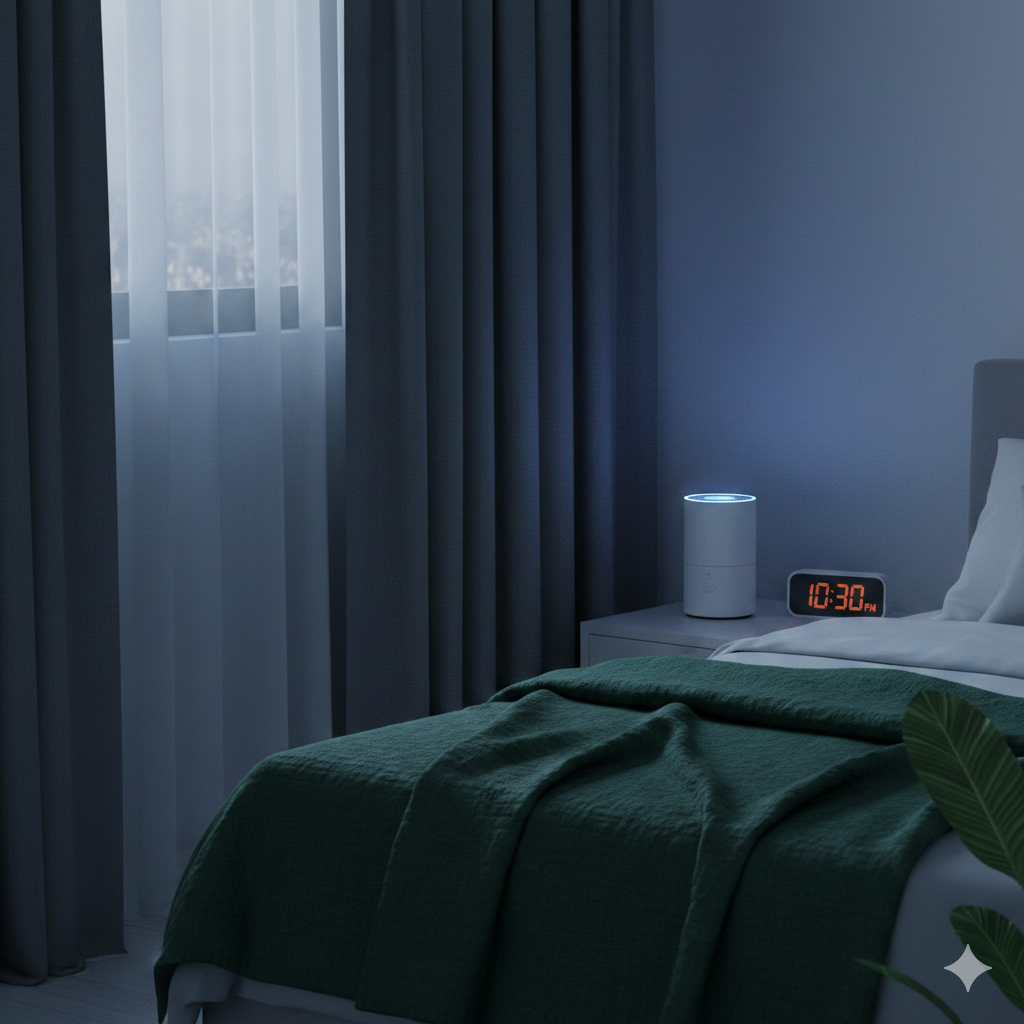
Your bedroom plays a surprisingly large role in sleep quality. Small, affordable changes can produce dramatic improvements.
Temperature — cool is key
Your body temperature naturally drops as you fall asleep. A room between 18–20°C supports this. Use a fan, open a window, or take a cool shower before bed.
Darkness — block out light
Even small amounts of light suppress melatonin. Use blackout curtains, an eye mask, or cover light sources. Your bedroom should be dark enough that you can't see your hand.
Noise — minimise disruptions
If you live in a noisy environment, consider earplugs or a white noise app. Consistent background sound like a fan can mask disruptive noises.
Common sleep disruptors
Caffeine timing
Caffeine has a half-life of 5–7 hours. A cup of coffee at 3 PM still has half its stimulant effect at 8–10 PM.
Tip: Set a personal caffeine cutoff — noon or 1 PM is ideal. Switch to herbal teas in the afternoon.
Blue light from screens
Phones and laptops emit blue light that directly suppresses melatonin production.
Tip: Stop using screens 30–60 minutes before bed. Charge your phone outside your bedroom if possible.
Irregular schedule
Sleeping in on weekends creates "social jet lag" — as disruptive as flying across two time zones weekly.
Tip: Keep your wake time within a 30-minute window every day, including weekends.
When sleep problems need professional help
Signs it may be more than bad habits
- Chronic insomnia: Taking more than 30 minutes to fall asleep most nights for three or more months.
- Excessive daytime sleepiness: Overwhelming tiredness despite adequate time in bed — could indicate sleep apnea.
- Frequent nightmares: Disturbing dreams that wake you regularly may be connected to trauma or PTSD.
- Breathing disruptions: Loud snoring, gasping, or stopping breathing during sleep requires medical evaluation.
- Sleep-mood spiral: If poor sleep and low mood reinforce each other, a therapist can help break the cycle.
A trained therapist can offer cognitive behavioural therapy for insomnia (CBT-I), the gold-standard treatment — more effective than sleeping pills for long-term results.