

Understanding anxiety what it is and what helps
A compassionate guide to recognising anxiety in yourself and others, why it shows up, and when to seek support.
12 min read
Anxiety is a signal, not a flaw
Anxiety is one of the most common mental health experiences in the world — yet it remains deeply misunderstood, especially in African cultures where emotional struggles are often met with silence, prayer alone, or the instruction to simply "be strong."
The truth is, anxiety is not a character flaw. It is a signal from your body and mind that something needs attention.
What anxiety actually is
At its core, anxiety is your body's built-in alarm system — the famous fight-or-flight response that helped our ancestors survive genuine threats.
In modern life, this same system activates in response to work deadlines, social situations, financial pressure, or uncertainty. The problem is not that you have anxiety. Everyone does. The problem arises when the alarm fires too often, too intensely, or in situations where there is no real threat.
Normal anxiety
Feeling nervous before a job interview, a first date, or an exam. Temporary, proportionate, and goes away once the event passes. Can actually sharpen focus.
Disordered anxiety
Persistent worry that doesn't match the situation, lasts for weeks or months, and interferes with daily life — sleep, relationships, work, ability to enjoy things.
How anxiety shows up in your body
Anxiety is profoundly physical. When your brain perceives a threat — real or imagined — it triggers a cascade of adrenaline and cortisol that affects nearly every system in your body.
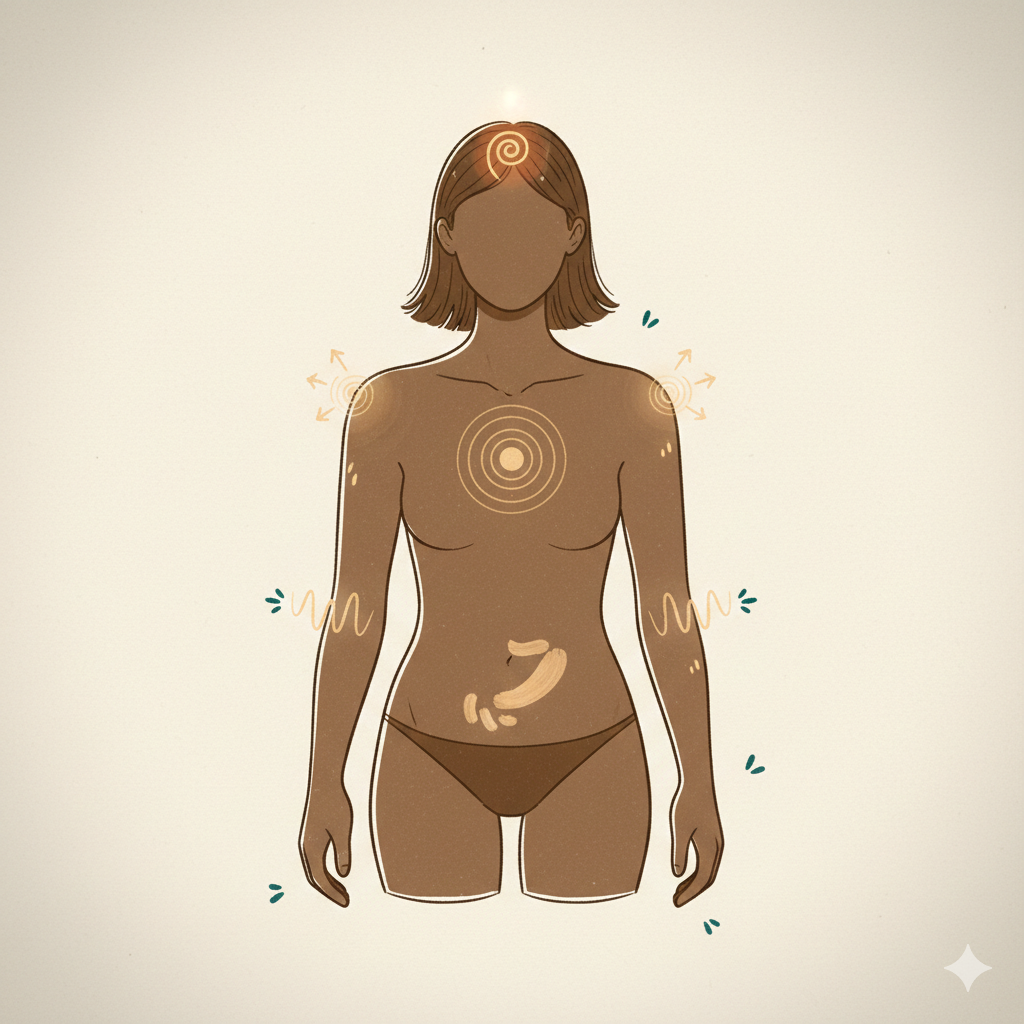
Racing heart
Your heart pounds as adrenaline increases your heart rate to pump blood to your muscles faster.
Tight chest
Chest tightness or difficulty breathing as your respiratory system shifts into overdrive.
Stomach issues
Nausea, cramping, or upset stomach. Stress hormones directly disrupt digestion — hence 'butterflies'.
Muscle tension
Chronic tightness in shoulders, jaw, neck, or back. Muscles brace for impact — and never fully relax.
Sweating
Excessive sweating, clammy hands, or hot flashes. Your body's cooling system activates for exertion that never happens.
Understanding that these symptoms are your nervous system doing what it was designed to do — not something "wrong" with you — can itself reduce anxiety.
Common types of anxiety
Anxiety is not one-size-fits-all. Understanding which type resonates can help you find the right kind of support.

Generalised Anxiety Disorder (GAD)
Persistent, excessive worry about many different things even when there is no specific reason. The mind is always 'on', cycling through worst-case scenarios.
Social Anxiety
Intense fear of being judged, embarrassed, or humiliated in social situations. Far beyond shyness — can lead to avoiding phone calls, meetings, gatherings, or eating in front of others.
Panic Disorder
Sudden, intense panic attacks — overwhelming fear with physical symptoms like pounding heart, shortness of breath, dizziness, feeling that you are dying or losing control.
Health Anxiety
Excessive preoccupation with having or developing a serious illness. Normal sensations interpreted as catastrophic. Doctor reassurance only briefly relieves the cycle.
Performance Anxiety
Fear tied to performance situations — exams, presentations, athletic events. The pressure to perform triggers anxiety that actually undermines performance.
Anxiety in the African context
Across many African communities, mental health challenges like anxiety carry heavy stigma. People are told to pray harder, toughen up, or stop overthinking. Emotional vulnerability is frequently seen as weakness — particularly for men.
Communal expectations add another layer. Admitting struggles can feel like letting everyone down. Many carry anxiety in silence, channelling it into physical complaints — headaches, fatigue, stomach problems — rather than naming the emotional distress underneath.
Why this matters
Economic stressors are real. Unemployment, rising costs of living, unstable infrastructure — these are daily realities that keep millions in chronic heightened alertness. Anxiety in this context is not irrational.
Stigma delays help. People often wait years before seeking support — only doing so when symptoms have become severe.
You are not weak for struggling. Experiencing anxiety does not mean you lack faith, discipline, or strength. It means you're human.
Simple strategies that help
While professional support is important for persistent anxiety, here are evidence-based strategies you can start using today.
Breathing exercises
Slow, controlled breathing activates your parasympathetic nervous system. Try box breathing or 4-7-8.
Movement
Physical activity burns off adrenaline and releases endorphins. A 20-minute walk counts.
Limit caffeine
Caffeine stimulates the same pathways as anxiety. Reducing coffee and energy drinks — especially after noon — makes a difference within days.
Sleep hygiene
Anxiety and poor sleep fuel each other. Prioritise consistent sleep — a regular bedtime, dark room, wind-down routine.
Talk to someone
Anxiety thrives in isolation. Speaking to a trusted friend, family member, or therapist breaks the cycle of internal rumination.
When to seek professional help
Self-help strategies are a great starting point, but some anxiety requires professional guidance. There is no shame in this.

Signs it is time to reach out
- Lasting two or more weeks with no improvement on its own.
- Interfering with work or daily life — can't concentrate, can't complete tasks.
- Panic attacks with chest pain, shortness of breath, dizziness.
- Avoidance behaviours — skipping social events, missing work, isolating yourself.
- Substance use to cope with how you feel.
A trained therapist can offer evidence-based treatments like Cognitive Behavioural Therapy (CBT). Mindscape can help match you with a licensed therapist who understands your context and speaks your language.