

Building habits that stick
The lasting change formula isn't willpower — it's system design. Strategies from behavioural psychology, adapted for real life.
10 min read
Why willpower isn't enough
The secret to lasting change is not willpower — it is system design. The people who build remarkable habits don't have more discipline than you. They have better systems.
Habits operate on a cue-routine-reward loop that largely bypasses conscious willpower. Your brain looks for shortcuts it can automate.
The cue-routine-reward loop
Every habit follows the same cycle: a cue triggers the behaviour, the routine is the behaviour itself, and the reward reinforces it.
Motivation is a wave, not a constant
Motivation peaks when you set a goal and fades rapidly. After 2–3 weeks, only systems and environment sustain action.
Environment shapes behaviour
People with exceptional self-control are often just better at structuring their environment. They reduce exposure to temptation.
The takeaway is liberating: you don't need to become a different person. You need to build a different system.
The power of habit stacking
One of the most effective strategies from James Clear's Atomic Habits is habit stacking — linking a new behaviour to an existing one. Use a habit you already do automatically as the cue for the new habit.
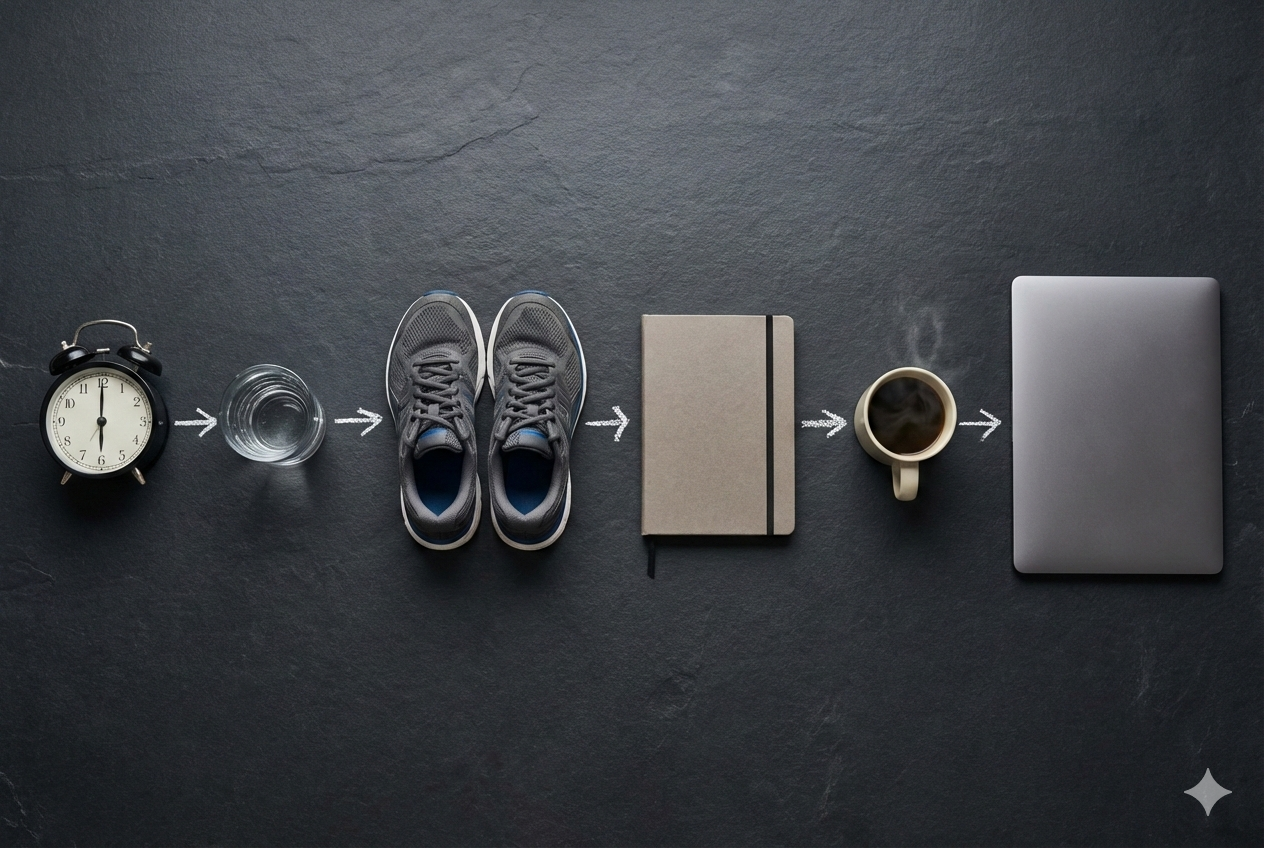
The formula is simple: "After I [CURRENT HABIT], I will [NEW HABIT]." You borrow neural pathways that already exist instead of trying to build new ones.
Habit stacking examples
After my morning prayer → I will write in my journal for 2 minutes.
After I finish lunch → I will take a 5-minute walk outside.
After I sit down at my desk → I will write down my three priorities for the day.
After I brush my teeth at night → I will do a 1-minute mood check-in on Mindscape.
Start embarrassingly small
Most habits fail because we start too big. The solution is the 2-minute rule: scale any habit down until it takes two minutes or less.

The goal is becoming the type of person who does the activity. Every time you show up, you cast a vote for your new identity.
- Want to meditate? Start with 1 minute of deep breathing.
- Want to read more? Read one page before bed.
- Want to exercise? Do a single push-up.
- Want to stay hydrated? Drink one glass of water when you wake up.
- Want to journal? Write one sentence about how you feel right now.
Design your environment
Your environment is the invisible hand that shapes your behaviour. Make good habits less friction, bad habits more friction.
Reduce friction for good habits
- Put your journal on your pillow so you see it before bed.
- Lay out your gym clothes the night before — shoes, socks, everything.
- Keep a water bottle on your desk so hydration requires zero effort.
- Set the Mindscape app as the first icon on your home screen.
- Prepare healthy snacks in advance so they're easier to grab than junk food.
Increase friction for bad habits
- Put your phone in another room during study or sleep time.
- Delete social media apps from your home screen — make yourself type the URL.
- Unplug the TV after each use so you must consciously decide to watch.
- Remove junk food from visible surfaces — out of sight reduces cravings.
- Log out of distracting websites so each visit requires effort.
The compound effect
Habits don't produce linear results — they produce compound results. If you improve 1% every day for a year, you end up 37.78 times better.
The 1% rule
1% better each day for one year: 1.01365 = 37.78× improvement
1% worse each day for one year: 0.99365 = 0.03 — nearly nothing
You won't see results on day one, or even day thirty. But by day ninety, the trajectory is unmistakable — especially when you track it.
Tracking your progress
Jerry Seinfeld famously used a wall calendar to track his writing habit. Every day he wrote, he marked a red X. The rule: don't break the chain.
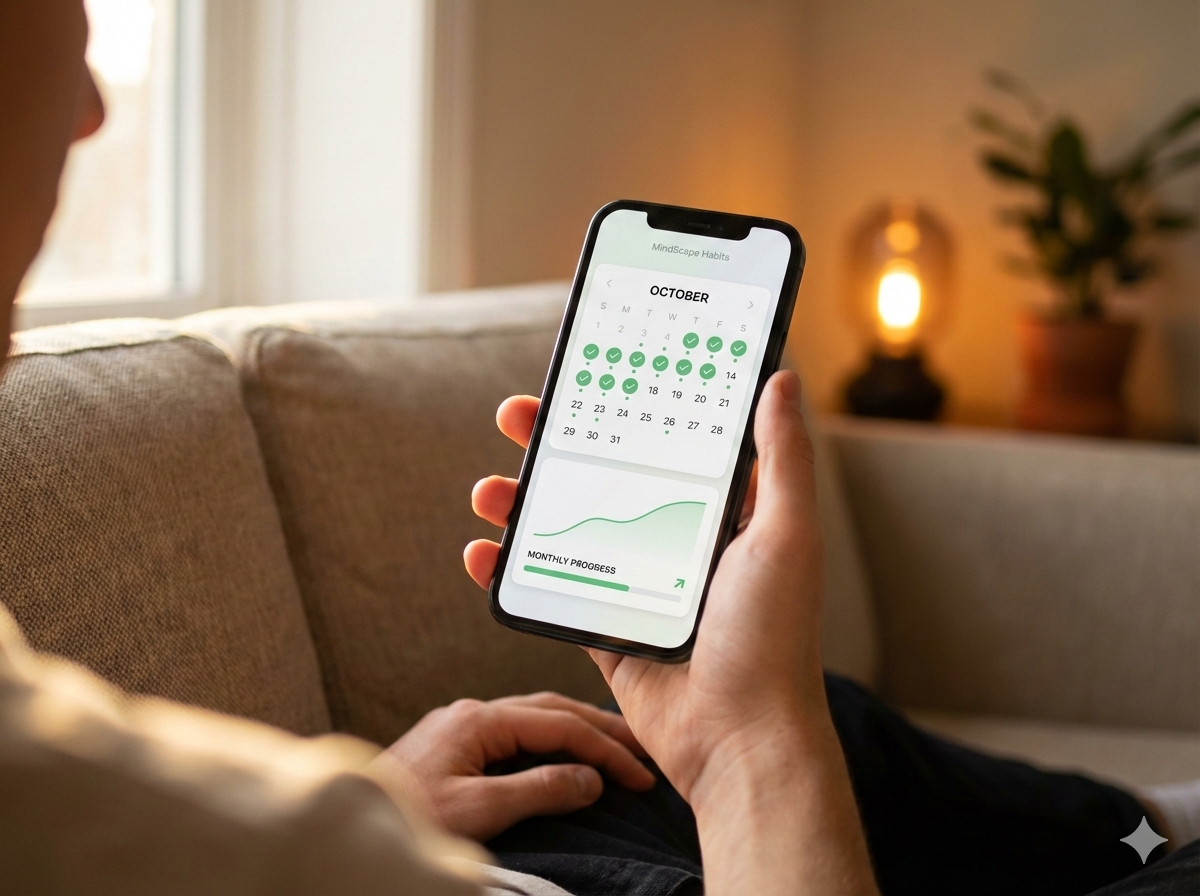
When you miss a day — and you will — the rule is simple: never miss twice. One missed day is an accident. Two missed days is the start of a new (bad) habit.
Habits that support mental health
Not all habits are equal. These six, backed by research, have the greatest impact on your mental well-being. Start with one. Master it. Then stack the next.
Daily mood check-in
Take 60 seconds to name how you feel. Emotional awareness is the foundation of emotional regulation.
5-minute breathing
A short breathing exercise activates your parasympathetic nervous system, reducing cortisol in minutes.
Gratitude journaling
Writing three things you're grateful for rewires your brain to scan for positives.
Daily movement
Even 15 minutes of walking releases endorphins and BDNF, a protein that supports brain health.
Consistent sleep
Going to bed and waking at the same time daily regulates your circadian rhythm.
Social connection
One meaningful conversation per day reduces loneliness and strengthens your sense of belonging.